Housing affordability again leads Metro Atlanta residents’ concerns
ARC’s new survey separates the region’s biggest problems from the pressures households feel. Its findings also show support for smaller housing types.
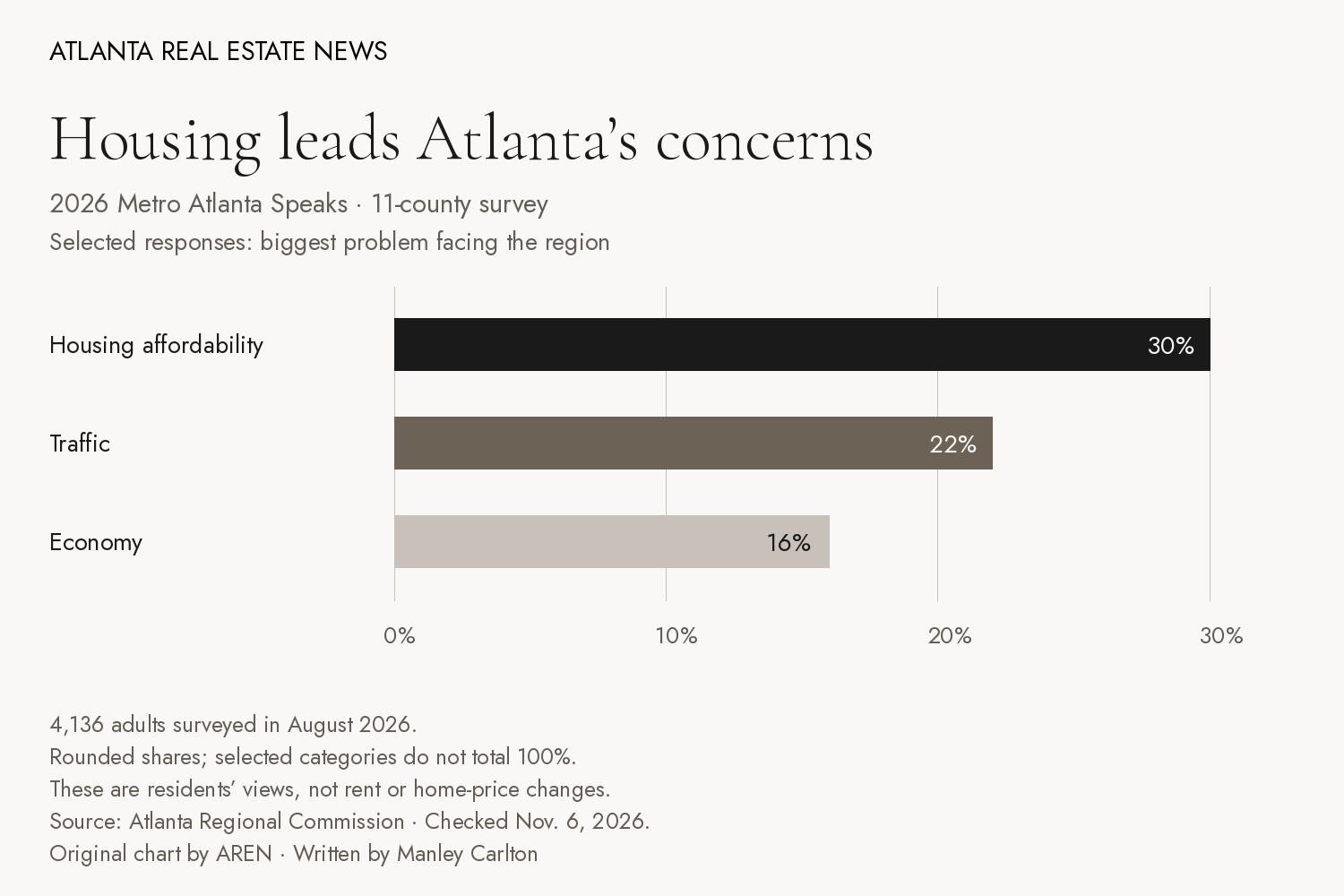
Photo creditDetails
A housing concern, not a price index
Housing affordability is the biggest problem facing Metro Atlanta for 30% of respondents in the Atlanta Regional Commission’s 2026 Metro Atlanta Speaks survey. Traffic follows at 22% and the economy at 16%. ARC says housing topped the list for a second consecutive year.
A separate question found 51% describing housing costs as a major obstacle to getting ahead financially. That finding is about perceived financial pressure. It is not a rent-growth figure, a home-price change or the share of households meeting a specified housing-cost-to-income threshold. The two questions should not be combined.
Read the findings at the right scale
Kennesaw State University’s A.L. Burruss Institute surveyed 4,136 adults by telephone and online in August 2026. ARC describes an 11-county study with a regional margin of error of plus or minus 1.5 percentage points. The regional figure should not be transferred to a smaller neighborhood or subgroup.
The geography matters for readers evaluating an individual home or development. A regional opinion survey can identify concerns that deserve attention, but it cannot tell a buyer what a particular property is worth or establish the rent a landlord can achieve. Those questions need property-specific evidence.
Smaller housing types attract support
ARC’s overview reports support for backyard apartments or in-law suites and tiny-home developments from 64% of respondents each. Duplexes received 57% support; apartment buildings with five to nine units received 51%. These are rounded shares responding to housing-type questions, not approvals of specific projects.
AREN’s analysis: these findings give local planners a basis for discussing a wider range of housing choices. They do not replace zoning review, infrastructure analysis or a neighborhood’s consideration of an actual proposal. For a proposed development, the useful follow-up remains its location, permitted use, approval stage and delivery plan.
From survey findings to commitments
ARC’s November 3 announcement also introduced Opportunity Rising, an economic-mobility coalition led with United Way of Greater Atlanta, the City of Atlanta’s Neighborhood Reinvestment Initiative and the Arthur M. Blank Family Foundation. Its stated priorities cover data, policy, investment coordination and community voice.
The next meaningful evidence will be specific commitments: which organizations will act, what resources they will devote and how progress will be assessed. Readers should distinguish that work from an individual housing development’s financing or construction milestones. The announcement alone does not establish an application opening or a new household benefit.
Sources & further reading
Sources checked 2026-11-06.
About Atlanta Real Estate News
Atlanta Real Estate News is an independent publication covering property, development, business, design and life in Metro Atlanta. We exist to help readers understand what is changing, why it matters and what to watch next through clear reporting, verified sources and local perspective.