Mortgage rates ease to 7.18%: a $400,000 loan shows the weekly difference
The national 30-year average fell six basis points, but remains above a year ago. An Atlanta homebuyer’s comparison still needs the property’s taxes, insurance and full loan costs.
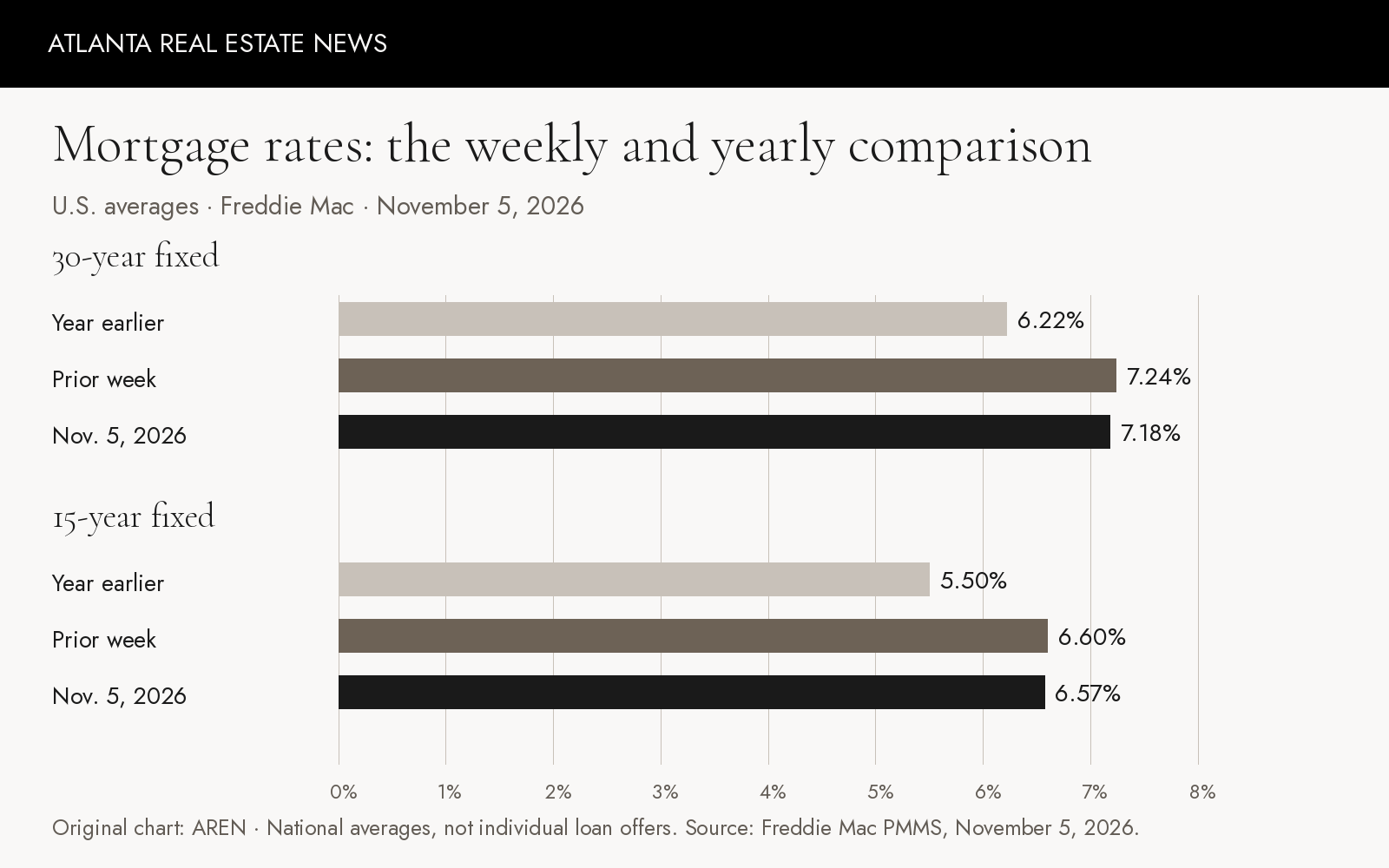
Photo creditDetails
A smaller weekly rate, a higher yearly benchmark
Freddie Mac’s November 5 mortgage survey puts the average 30-year fixed rate at 7.18%, down from 7.24% the previous week. The 15-year average slipped to 6.57% from 6.60%. For Atlanta buyers comparing financing this weekend, that is a modest improvement in the national benchmark.
The yearly comparison points in the other direction. At the corresponding time in 2025, the 30-year average was 6.22% and the 15-year average was 5.50%. The latest 30-year figure is therefore 0.96 percentage point higher than a year earlier, despite its 0.06-point weekly decline.
What six basis points change on a $400,000 loan
To make the weekly move tangible, AREN calculated the principal-and-interest payment on an illustrative $400,000 loan repaid over 30 years. At 7.18%, it is approximately $2,710 a month. At 7.24%, it is approximately $2,726—a difference of about $16 a month.
Using the year-earlier 6.22% benchmark with the same loan amount and term produces approximately $2,455 a month, about $255 less than the new benchmark calculation. These figures use a fixed-rate amortization formula and round to the nearest dollar. They exclude property taxes, insurance, association dues, closing costs and any mortgage insurance.
The $400,000 balance is an illustration, not an Atlanta median loan or a lender offer. Our editorial reading: a small weekly rate movement can help at the margin, but it does not erase the larger change in financing costs compared with a year ago.
Why a national average is not your Atlanta quote
Freddie Mac’s survey focuses on conventional, conforming purchase loans with 20% down and excellent credit. Its national results come from loan applications, rather than a list of rates guaranteed to every borrower. The published average does not establish pricing for a particular Atlanta property, jumbo mortgage or government-backed loan.
The survey covers applications from the preceding Thursday through Wednesday and is normally published on Thursday. It is a weekly snapshot, not a real-time Friday rate. Freddie Mac also says its current survey does not report average fees and points, so the headline interest rate cannot answer the full cost question.
Compare the payment and the cash needed to close
The Consumer Financial Protection Bureau’s Loan Estimate guide separates principal and interest from the estimated total monthly payment. Taxes and insurance can add to that payment, and some assessments may be payable separately. For an Atlanta-area home comparison, use the actual property’s estimated costs alongside the loan terms.
Compare lender origination charges, estimated cash to close and whether the quoted rate is locked. A lender credit can offset upfront costs while carrying a higher interest rate; the CFPB advises asking how the alternatives change the rate and total cost.
Keep the comparison consistent: the same purchase price, down payment, term and loan type make differences in lender pricing easier to assess. The next weekly survey will provide another national benchmark; a current Loan Estimate is the more useful document for evaluating a specific offer today.
Sources & further reading
Sources checked 2026-11-06.
About Atlanta Real Estate News
Atlanta Real Estate News is an independent publication covering property, development, business, design and life in Metro Atlanta. We exist to help readers understand what is changing, why it matters and what to watch next through clear reporting, verified sources and local perspective.