142,047 Eviction Filings: What Metro Atlanta’s Housing Data Actually Shows
An October housing report deserves a closer reading: the headline number measures court filings, while the geography, repeat cases and comparison period explain what it can—and cannot—tell us.
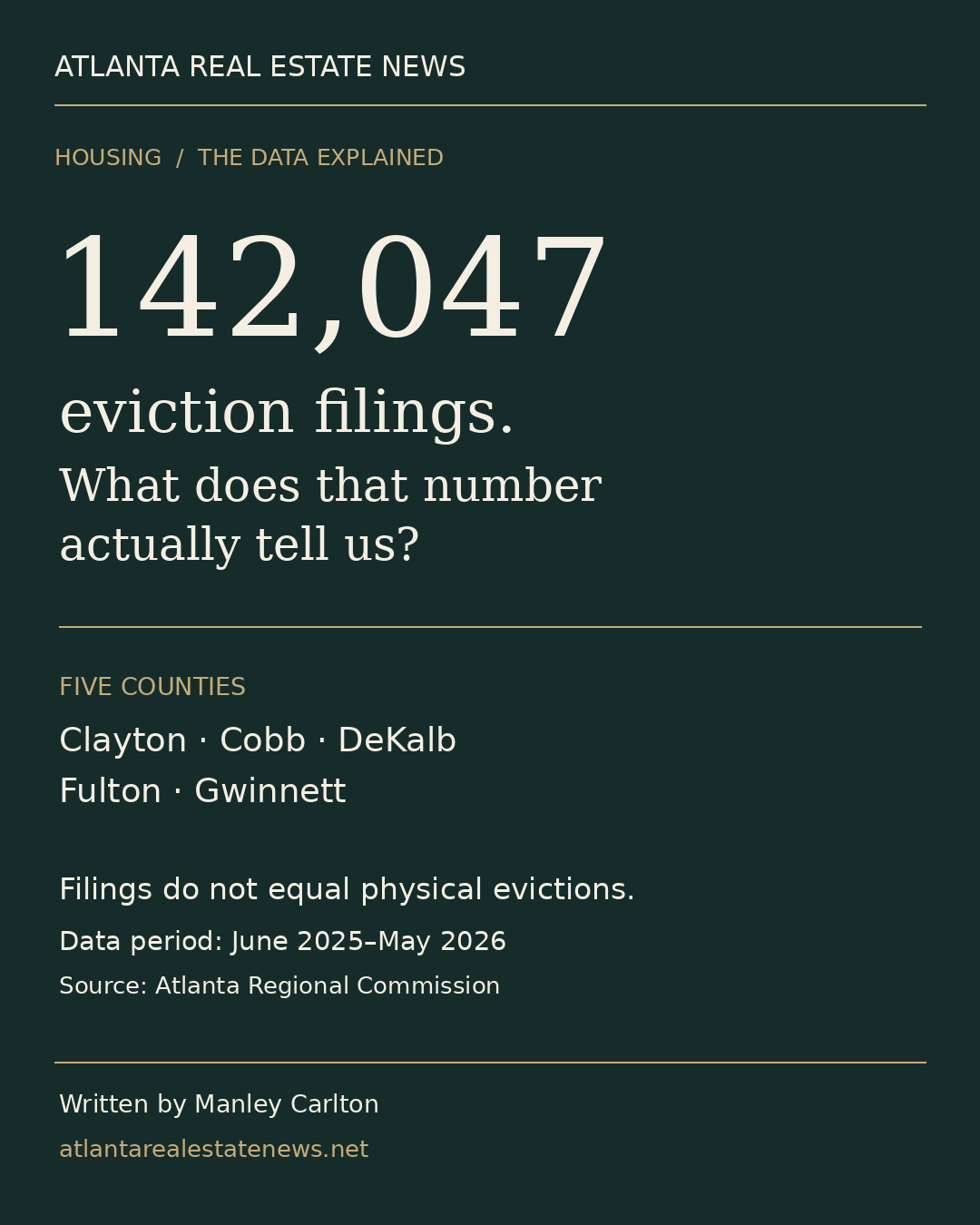
Photo creditDetails
The evidence
In its October 9 report, the Atlanta Regional Commission summarizes Eviction Lab data covering June 1, 2025 through May 31, 2026. Clayton, Cobb, DeKalb, Fulton and Gwinnett recorded 142,047 eviction filings, an annual filing rate of 24%. This is a review of that reporting period, not a count of evictions happening today.
The geographic differences
ARC reports annual filing rates of 37% in Clayton, 25% in DeKalb, 23% in Fulton, 21% in Gwinnett and 20% in Cobb. The City of Atlanta’s rate was 23%; the city overlaps county geography and should not be added as a sixth county.
What the measure leaves out
Filings do not establish the number of households physically displaced. Repeat cases can involve the same household, while informal departures may never enter court records. The region’s serial filing rate was 36%.
High does not necessarily mean rising
ARC says the five-county total was approximately 5% below Eviction Lab’s baseline annual average. Its report describes persistently elevated filing activity rather than evidence of a new surge.
Our analysis
The practical question is how to translate a regional warning into a useful local response. A five-county total should prompt closer investigation, rather than assumptions about the circumstances of an individual tenant, building or owner.
For renters
Treat a statistical article as background, not an assessment of a personal case. Someone dealing with an actual notice needs guidance based on the document, jurisdiction and case status. A regional percentage cannot tell a household what a court will decide.
For property owners and investors
A useful operating review would distinguish rent arrears, court filings, repeat cases, resolved disputes and actual vacancies. Combining those categories can obscure both the financial problem and the human circumstances. This is an analytical framework, not a claim that the report measured any individual property’s performance.
For neighborhood readers
County averages leave important questions unanswered. Which buildings account for repeated cases? How do patterns change over time? What happens after a filing? Those are stronger follow-up questions than treating every case as a completed removal.
What to watch next
Updated data with an explicit coverage period, comparable local trends and documented case outcomes would help clarify whether conditions are improving or worsening. This analysis does not establish current November filing totals, the cause of each case or a forecast for rents and property values.
Sources & further reading
Sources checked 2026-11-01.
About Atlanta Real Estate News
Atlanta Real Estate News is an independent publication covering property, development, business, design and life in Metro Atlanta. We exist to help readers understand what is changing, why it matters and what to watch next through clear reporting, verified sources and local perspective.