Gainesville’s inland port brings a Savannah rail link closer to Atlanta-area businesses
The October dedication followed a May start of operations. Here is how the freight connection works—and what its traffic projections do and do not establish.
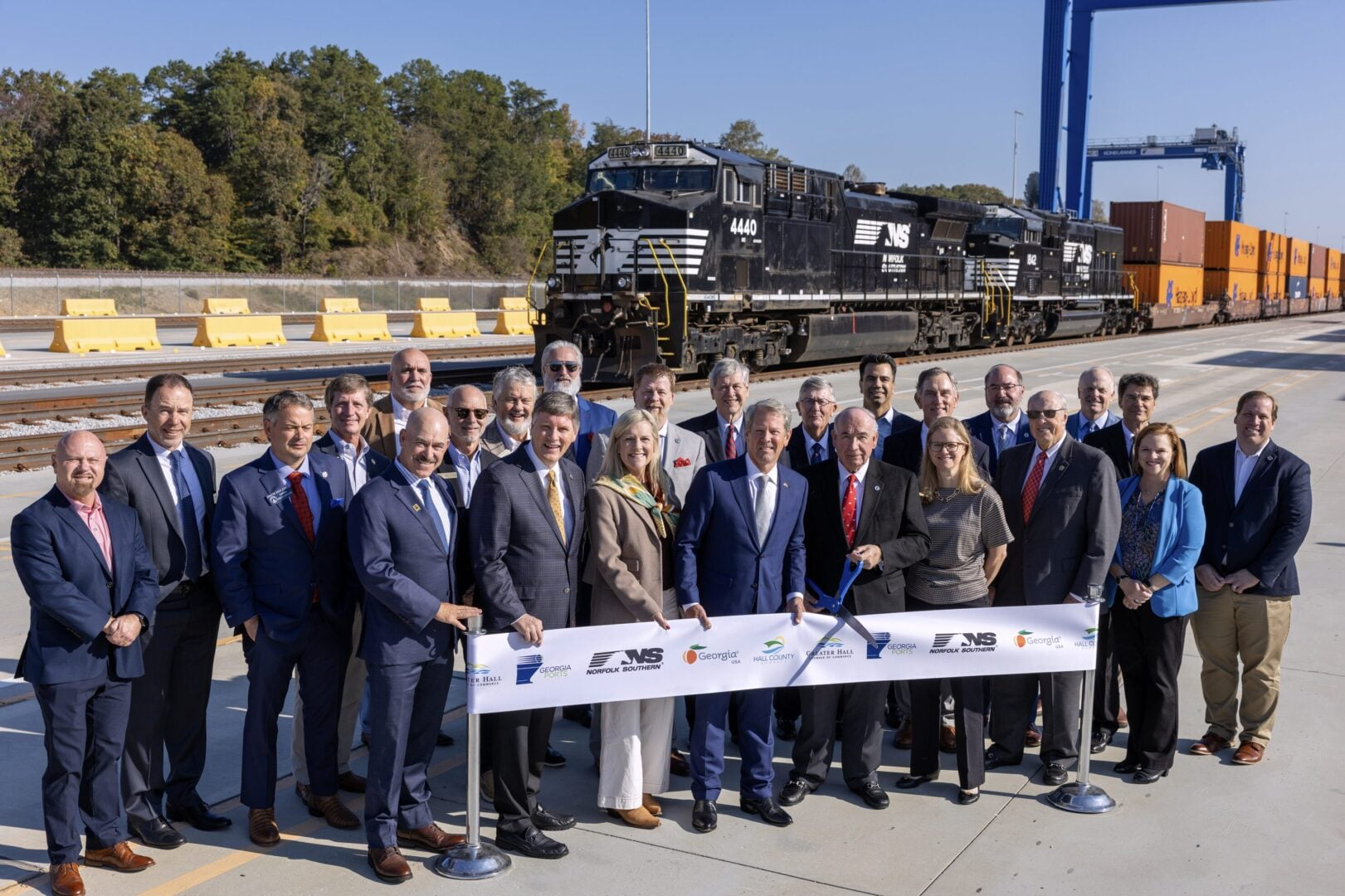
Photo: Georgia Ports AuthorityDetails
A dedication after the first trains
Georgia’s $134 million Gainesville Inland Port has moved beyond construction into freight service, with its October 29 dedication drawing renewed attention to a rail alternative for cargo moving through the Atlanta region. Gov. Brian Kemp joined port officials and local leaders for the ceremony.
The terminal’s first operating day was May 4, 2026, according to the Georgia Ports Authority’s May announcement. The October event was a formal celebration of an operating facility, rather than the start of service.
How cargo reaches Savannah
Norfolk Southern describes a 104-acre terminal with direct rail service to the Port of Savannah five days a week. Its capacity at full ramp-up is 200,000 annual lifts; that figure describes what the facility can accommodate, not a reported first-year throughput.
The inland port allows containers to transfer between trucks and trains closer to Northeast Georgia businesses. GPA describes the connection as an alternative to a roughly 600-mile roundtrip truck journey to Savannah. The facility was called the Blue Ridge Connector in earlier planning materials.
The Atlanta traffic claim is a forecast
GPA expects 26,000 containers to shift to rail in the first operating year. Its October release identifies imported home and retail goods and manufacturing components, alongside exports that include farm and forest products.
That projection should not be read as a measured reduction in Atlanta congestion. The practical outcome depends on how much cargo uses the service and which truck journeys it replaces. The reviewed announcements do not provide a completed first-year traffic assessment.
Local roads and the next useful evidence
GPA also funded $4.8 million in Hall County road work, including changes to White Sulphur Road and Cagle Road and removal of an at-grade rail crossing. Its May release says those road projects were completed in late summer 2025.
For readers following industrial development, the next useful evidence is actual terminal volume and documented business investment connected to the service. For nearby residents, local truck access and crossing conditions remain separate questions from the projected reduction in long-haul trips.
Sources & further reading
Sources checked 2026-11-07.
About Atlanta Real Estate News
Atlanta Real Estate News is an independent publication covering property, development, business, design and life in Metro Atlanta. We exist to help readers understand what is changing, why it matters and what to watch next through clear reporting, verified sources and local perspective.