Atlanta’s housing-prevention pilot offers a route to help before a household loses its home
City residents facing imminent housing loss can seek screening through four providers. Income eligibility starts the process; it does not guarantee assistance.
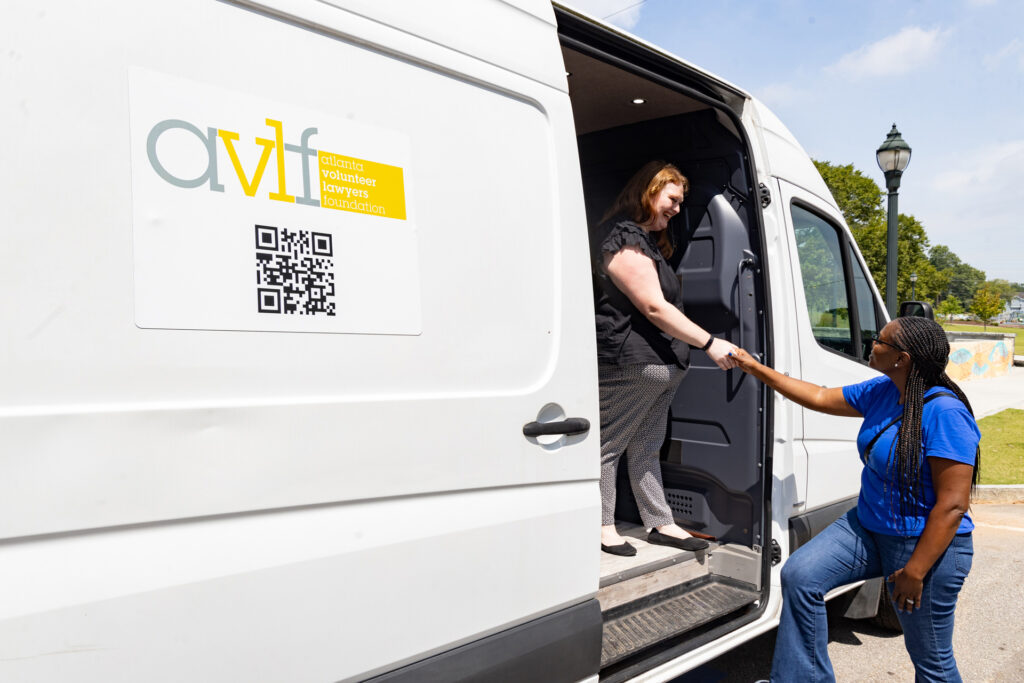
Photo: Atlanta Volunteer Lawyers Foundation, press kit.Details
Start with the city’s screening criteria
Atlanta’s homelessness-prevention pilot is operating through local providers, with financial assistance, support services and legal help aimed at households at immediate risk of losing their housing. The practical first step is a provider assessment, rather than an application for a guaranteed payment.
ATL311 sets three initial requirements: a household must be housed but at risk of losing housing within 14 days, live inside Atlanta city limits, and have income no higher than 80 percent of area median income. Meeting these requirements leads to further assessment and selection through the pilot’s referral and research process.
The city identifies Atlanta Volunteer Lawyers Foundation, Project Community Connections Inc., POWER Atlanta and Zaban Paradies Center as access points. Its guidance directs residents to contact a participating provider for screening.
Use the updated referral route
AVLF directs residents to its Emergency Financial Assistance page for Atlanta Rising screening. The page describes a limited research pilot in which participants are selected at random from eligible applicants. Completing a screening does not mean a household has been approved for funding.
AVLF also links to other housing-assistance resources on the same page, including the Housing Help Center and a broader services directory. Readers can use those routes to explore additional support; this reporting has not established current capacity or an award timetable for any provider.
Keep the progress figures in context
AVLF’s program update reports $393,017 in assistance to 126 Atlanta households through its Community Support and Prevention team. Those are one provider’s figures, not a count for the entire Atlanta pilot. The page does not display a reporting cutoff, so they should be described as the figures posted when checked, rather than a November monthly total.
Separately, GPB reported on November 2 that more than 200 households had received help through the broader Right at Home program since July. The two counts describe different scopes and should not be added together.
The three-year Atlanta pilot is led by Partners for HOME with the University of Notre Dame’s Wilson Sheehan Lab for Economic Opportunities. AVLF describes the research as a way to learn which targeted prevention strategies are effective. Assistance delivered so far is evidence of activity; it is not yet a published finding about the pilot’s long-term results.
Sources & further reading
Sources checked 2026-11-09.
About Atlanta Real Estate News
Atlanta Real Estate News is an independent publication covering property, development, business, design and life in Metro Atlanta. We exist to help readers understand what is changing, why it matters and what to watch next through clear reporting, verified sources and local perspective.